
Archives Directory for the History of Collecting in America
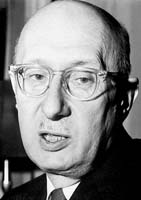
Archives related to: Soby, James Thrall, 1906-1979
| title | James Thrall Soby Papers, ca. 1930-1970, bulk ca. 1930-1960. | repository | The Museum of Modern Art |
| description | Correspondence, general files, research notes, articles, photographs and negatives, manuscripts, clippings, ephemera, and family papers. Arrangement Arranged in 8 series: I. Subject Interest Material: Artists and Movements 1930s-1960s. II. Writings. IIA. Museum. IIB. Non-Museum. III. Museum Matters, 1940s-1970s. IV. JTS collection: ca. 1930-1979. V. Personal/Family. VI. Confidential Material. VII. Giorgio de Chirico. VIII. Addenda; Subject material arranged alphabetically. Related collections Related papers are housed in other Departments of the Museum. Biographical/historical note Author, art critic, editor, collector, patron, connoisseur, and MoMA director and trustee. |
| extent | 24 linear ft., 3 v. |
| formats | Correspondence Notes Ephemera Transcript Manuscript |
| access | The records are open for research and contain few restricted materials. |
| record link | http://www.moma.org/research/archives/EAD/Sobyf.html |
| record source | https://library.nyarc.org/permalink/01NYA_INST/ai54l4/alma991003535889707141 |
| finding aid | Finding aid in the repository. |
| acquisition information | Received from the Estate of James Thrall Soby, 1980, and as a gift from Mr. and Mrs. Arthur A. Cohen, 1981. |
| updated | 02/14/2025 10:07:30 |
| .................................................................... | |
| title | James Thrall Soby Papers | repository | Wadsworth Atheneum Museum of Art |
| description | Archives of the Wadsworth Athenaeum, Hartford, Connecticut. See repository for more information. |
| extent | See repository for more information. |
| formats | |
| access | Contact repository for restrictions and policies. |
| record source | http://www.wadsworthatheneum.org/learn/archives.php |
| updated | 02/14/2025 10:07:30 |
| .................................................................... | |
| title | Man Ray letters and album, 1922-1976. | repository | The Getty Research Institute |
| description | A significant ensemble of letters and writings by or addressed to Man Ray, collected and safeguarded by his sister Elsie Ray Siegler and her daughter Naomi Savage. The letters from Man Ray are addressed to Siegler and Savage and provide a rich chronicle of his personal and professional life from 1922-1976. Letters to Man Ray are from celebrated Dada and Surrealist artists and authors, and document the dynamic artistic and literary scenes of the immediate pre- and post-World War II period in the United States. An album of predominately handwritten manuscripts supplements the letters by offering Man Ray's thoughts on a range of artistic issues. Series I consists of ca. 400 letters and postcards to Siegler and Savage. The letters to his sister date from shortly after he arrived in Paris in 1921 (letters begin in 1922) to her death in 1957. Siegler acted as his New York agent, and thus, handled many of his business affairs and set prices for some of his works. By the 1950s, she was his exclusive U.S. representative. Letters cover these and other matters including: tracking, storing and shipping of his works in New York; exhibitions throughout his career; paucity of sales in the early Paris and Hollywood years; requests for camera equipment and clothing; the war and property he abandoned in France; travels; creation, sale and inventory of chess sets; his preference for painting over photography (see especially letter dated 4/15/36); the "Sade" painting; and his parent's finances and other family matters. The letters to his niece begin in 1945 and terminate in 1976, the year Man Ray died. Savage took up her mother's mantle after her death. Therefore, these letters record a similar vigilance in caring for his works stored in New York and encompass topics such as: his encouragement of and advice on her photographic work; problems with gallery representation in Europe during his later Paris period; book publications, especially Self Portrait; success and recognition obtained in the 1960s; and his failing health from the mid-1960s onward. This series also includes a small quantity of letters received by Siegler and Savage from galleries and museums concerning loans and shipping, and correspondence with Adrienne Fidelin, Man Ray's lover in France prior to his departure for the U.S. in 1940. Series II contains ca. 375 letters and postcards of a personal and professional nature from artists, authors, museum personnel, collectors, publishers and gallery owners, spanning Man Ray's years in Hollywood from 1940-50. The letters from artists and authors document friendships, collaborations, works in progress, artists emigrating from France, and exhibitions. Notable correspondents are: Salvador Dali, Marcel Duchamp, Max Ernst and Dorothea Tanning, Henry Miller, Gilbert Neiman, Hans Richter, James Thrall Soby and Yves Tanguy. The Hollywood album is a collection of handwritten and typescript musings on art and aesthetics assembled by Man Ray from 1940-1948. Highlights consist of writings titled "Cinema," "Painting and photography," "Art and science," "Objects," "Sade," "Nature and the man," "Calm diatribe," "Revolving doors," "A note on the Shakespearean equations," and "Photography in reverse." Other materials include an ink drawing of a camera, two pencil drawings and a portrait photograph of Man Ray affixed to the album cover signed by him and Savage (1948). |
| extent | 1.5 linear ft. |
| formats | Correspondence Manuscript Ephemera |
| access | Open for use by qualified researchers |
| record link | http://hdl.handle.net/10020/cifa930027 |
| record source | https://primo.getty.edu/permalink/f/19q6gmb/GETTY_ALMA21133808720001551 |
| finding aid | Unpublished finding aid available in the repository and on the repository's webiste |
| updated | 02/14/2025 10:07:37 |
| .................................................................... | |
| title | James Thrall Soby papers, 1928-1975 (bulk 1935-1955) | repository | The Getty Research Institute |
| description | The Soby papers document his nearly 45-year career in 20th-century art scholarship and criticism. Materials date from about 1929 when he became a third partner in Edwin Valentine Mitchell, Inc., booksellers and publishers, to his retirement from the board of trustees at the Museum of Modern Art (MOMA) in 1975. The bulk of the material is from 1935-1955, when Soby was most active, and primarily consists of correspondence from 20th-century artists and photographers, MOMA personnel, curators, critics, friends and family members. The collection has very few copies of Soby’s own letters, but it does contain some manuscripts and notes for his publications. The correspondence files also include many original drawings and photographs and handmade cards from artists. Filed in separate series are a substantial quantity of letters and drawings from the Russian-born American painter and set designer Eugene Berman, and letters, manuscripts and other material from and about American painter Peter Blume. Series I. Correspondence (3 lin. ft.): Arranged alphabetically, includes many detailed letters from artists about their work, art theories and personal matters; letters about MOMA business, exhibitions at MOMA and elsewhere; comments about Soby monographs; and letters about the sale of art works to Soby and financial support for artists. The files also contain drawings, small art works and collages, photographs and manuscripts. Series II. Eugene Berman correspondence (1 lin. ft.): Letters from the artist (1932-69, bulk 1935-45) arranged chronologically with a separate substantial file of his drawings. Many of the letters concern his design and decoration of the dining room of Soby’s Connecticut house. Other letters are about Berman’s work in general, his anger over MOMA’s treatment of him and other expatriates involved in the Neo-Romantic movement, his relationship with Julien Levy, and his promotion of other artists’ work. Some of his drawings are in Berman’s "trompe l’oeil" manner and were sent as letters to Soby. Series III. Peter Blume material (.5 lin. ft.): Correspondence, arranged chronologically (1940-56, bulk 1940-45), from Blume about his paintings, his early life and career, and personal matters. There are a few letters from his wife Ebie. Also included are a pencil drawing and a small landscape painting, and manuscripts about Blume by Soby. Five versions of a Soby ms. on Blume, variously annotated by Blume and Alfred Barr, accompany Soby’s notes and correspondence about the production of his monograph on Blume. Series IV. Miscellaneous papers (.5 lin. ft.): Soby notes for a manuscript; review clippings of Soby monographs and exhibitions; his Last Will and Testament, 1942; and assorted Wadley family items such as correspondence, papers, poems, clippings and photographs.Biographical or Historical Notes: American art critic, curator, collector, director and trustee of the Museum of Modern Art, New York. |
| extent | 5 linear ft. (10 boxes, 1 oversize folder) |
| formats | Business Papers Personal Papers Correspondence Photographs Notes |
| access | Open for use by qualified researchers. |
| record link | http://archives2.getty.edu:8082/xtf/view?docId=ead/910128/910128.xml;query=;brand=default |
| record source | http://hdl.handle.net/10020/cat322248 |
| finding aid | Unpublished finding aid available in the repository; folder-level control. |
| acquisition information | Soby, James Thrall |
| updated | 02/14/2025 10:07:40 |
| .................................................................... | |
| title | Joan Miró letters, 1935-1958. | repository | The Getty Research Institute |
| description | Seven letters and one postcard to Joseph Foster, James Thrall Soby and others about his work for UNESCO, exhibitions organized by Pierre Matisse, his work for the ballet, and reflections on his artistic influences. Notes: Mss. (holographs, typescripts). Location: SPECIAL COLLECTIONS - CONTACT REFERENCE Call Number: 850267 |
| extent | 13 items. |
| formats | Correspondence Typescript Holographs |
| access | Open for use by qualified researchers. |
| record source | https://primo.getty.edu/permalink/f/19q6gmb/GETTY_ALMA21126949140001551 |
| updated | 04/24/2025 09:08:29 |
| .................................................................... | |
| title | Letter : Geneva, to James Thrall Soby, New Canaan, 1974 April 12. | repository | The Getty Research Institute |
| description | Relating to contemporary art exhibitions. Biographical or Historical Notes: Art dealer. Location: SPECIAL COLLECTIONS - CONTACT REFERENCE Call Number: 880022 |
| extent | 1 item (2 p.) |
| formats | Correspondence Holographs |
| access | Open for use by qualified researchers. |
| record link | http://hdl.handle.net/10020/cat133088 |
| record source | http://library.getty.edu/vwebv/searchBasic |
| updated | 02/14/2025 10:07:42 |
| .................................................................... | |
| title | Richard Huelsenbeck letters received and papers relating to Jean Arp, 1935-1964. | repository | The Getty Research Institute |
| description | Collection contains thirty-nine personal and business letters and postcards from Hans and Marguerite Arp to Richard and Beate Huelsenbeck. Some postcards are also signed by Gabrielle Buffet-Picabia, Otto Flake and others. The letters include significant mention of Arp’s exhibitions, including the successful "Derriere Le miroir" (1950). Also included are letters from James Thall Soby. Publications by and about both Arp and Huelsenbeck are discussed, and include Huelsenbeck’s Dada Manifesto (Anthology) and Arp’s "On My Way" and "Dreams and Projects." Also mentioned is Arp’s Grand Prize in the 1954 Biennale. Among the many friends and acquaintances discussed are several other Dadaists and Surrealists; New York dealers and curators, including Curt Valentin, whose 1954 death is mentioned; and artists, editors and writers, among whom Friedrich Vordemberge-Gildewart, Siegfried Giedion-Welcker and Gabrielle Buffet-Picabia are of particular note. The work and exhibitions of Sophie Tauber-Arp are discussed in depth, and of particular interest is the chronicle of Arp’s relationship with Helen Burckhardt (1950) whom he wanted to marry. Throughout much of the letters is reference to Arp’s illness. There are also letters from James Thrall Soby to Huelsenbeck requesting that he write an article on Arp for a forthcoming retrospective and monograph on Arp at the MOMA, New York, 1957. Biographical or Historical Notes: German painter and poet. Location: SPECIAL COLLECTIONS - CONTACT REFERENCE Call Number: 860970 |
| extent | 46 items. |
| formats | Business Papers Personal Papers Correspondence Postcards |
| access | Open for use by qualified researchers. |
| record link | http://hdl.handle.net/10020/cat76305 |
| record source | http://library.getty.edu/vwebv/searchBasic |
| updated | 02/14/2025 10:07:42 |
| .................................................................... | |
| title | Alfred Hamilton Barr papers, [ca. 1915-1983]. | repository | Archives of American Art |
| description | Files kept during Barr's tenure at the Museum of Modern Art, including personal and professional correspondence with museum officials, curators, writers, historians, critics, art associations, foundations, magazines, artists, and collectors, including John Canaday, Stanton Catlin, Camilla Gray, Rene d'Harnoncourt, John Hightower, Roland Penrose, and James Thrall Soby; files on staff, exhibitions, publications and collections of MoMA, and abstract art, cubism and futurism, some related to Barr's book CUBISM AND ABSTRACT ART, 1936; files on the Foundation for Arts, Religion and Culture (ARC), Barr's travels, lectures, speeches, exhibitions, publications, political controversies, and artists and collections in the U.S.S.R.; writings, including travel notebooks regarding his trip to Russia, 1959, visits with Pablo Picasso, 1956, and Henri Matisse, 1952; exhibition catalogs, clippings and printed material; and photographs. Also included are material collected by Margaret Scolari Barr, including Alfred's obituaries, A MEMORIAL TRIBUTE, 1981, an invitation and guest list to the memorial service, and condolence letters; and photocopies of autograph letters, ca. 1920s-1970s, from the Barr's collection sold to Arthur A. Cohen in 1975. Bio / His Notes: Museum director, curator, and critic; New York, N.Y. Died 1981. Became the first director of the Museum of Modern Art in 1929. He was married to Margaret Scolari Barr, art historian and teacher. Location of Original: Originals in the Museum of Modern Art, New York, N.Y. Cite as: Alfred H. Barr, Jr. papers, [ca. 1915-1983]. Owned by the Museum of Modern Art. CITATION MUST ALSO INCLUDE MICROFILM REEL AND FRAME NUMBERS. |
| extent | 61 microfilm reels. reels 2164-2199, 3145-3160 and 3259-3266 |
| formats | Microfilm |
| access | Patrons must use microfilm copy. Authorization to publish, quote or reproduce must be obtained from: Museum Archivist, Museum of Modern Art, 11 West 53rd Street, New York City, New York 10019. Museum of Modern Art requires full citation to include microfilm reel and frame numbers, and reference to MoMA as the owner of the Alfred H. Barr papers. No copies to be made without letter of permission. |
| record source | https://www.aaa.si.edu/collections/alfred-hamilton-barr-papers-7097 |
| finding aid | A microfilm inventory prepared by the Archives of American Art and an inventory for record groups 5-10 compiled by the Museum of Modern Art is available in all AAA offices and at the Museum of Modern Art. |
| acquisition information | The Museum of Modern Art was responsible for the selection, organization and arrangement of the papers microfilmed. Five series were not microfilmed, including Matisse (6 ft.), Picasso (7 ft.), Russian culture (6 ft.), family letters (2 ft.), and education (2 ft.). |
| updated | 04/24/2025 09:08:29 |
| .................................................................... | |
| title | Oral history interview with James Thrall Soby, 1970 July 7 | repository | Archives of American Art |
| description | An interview of James Thrall Soby conducted by Paul Cummings for the Archives of American Art. Bio/History: Writer, critic; New Canaan, Connecticut. Died 1979. |
| extent | 1 sound tape reel (2 hours) ; 7 in. Transcript: 29 p. |
| formats | Sound Recording Transcript Interview |
| access | Contact repository for restrictions and policies. |
| record source | https://www.aaa.si.edu/collections/interviews/oral-history-interview-james-thrall-soby-12688 |
| acquisition information | This interview is part of the Archives' Oral History Program, started in 1959 to document the history of the visual arts in the United States, primarily through interviews with artists, historians, dealers, critics and others. |
| updated | 04/24/2025 09:08:29 |
| .................................................................... | |
| title | Ben Shahn papers, 1879-1990 (bulk 1933-1970) | repository | Archives of American Art |
| description | Biographical material, letters, project files, business records, notes, writings, art work, source files, interview transcripts, audio-visual material, printed material, photographs, and artifacts. REELS D143-D148: Letters, 1933-1963, primarily to Shahn, from publishers, art organizations, galleries, and colleagues, among them Leonard Baskin, Alexander Calder, Joseph Hirsch, Clifford Odets, Robert Osborn, Robert Rauschenberg, Diego Rivera, Selden Rodman, David Alfaro Siqueiros, James Thrall Soby, Raphael Soyer, and William Carlos Williams. Also, lists of works, some priced; writings, including essays, poems, and typescripts; printed material, 1956-1961, such as clippings, exhibition catalogs, and press releases; an interview transcript, 1960; and a photograph, 1955, of Shahn's residence in Truro, Massachusetts. REEL N70-6: Writings, 1949-1966, including addresses and essays by Shahn; 7 royalty statements; and 3 letters from publishers, 1965-1966. REELS 133-135: Letters received, 1946-1969, from publishers, art organizations, and colleagues, including Alexander Calder, Leo Lionni, Archibald MacLeish, Robert Osborn, and Jerome Robbins. One from David Alfaro Siqueiros, 1968, contains photographs of Siqueiros, his wife, and his art works. Printed material, 1936-1968, includes clippings, exhibition catalogs, brochures, and miscellaneous announcements; 2 biographical accounts, poems, typescripts of reviews, and an etching. REELS 5006-5027: Biographical material, 1924-1984, includes biographical sketches for Ben and Bernarda Shahn, a passport for Shahn and his first wife, Tillie, membership cards, award certificates, and a birth certificate for Jonathan Shahn. Letters, 1929-1990, are from Shahn's children, publishers, art organizations including the International Graphics Society and the National Institute of Arts and Letters, schools including Famous Artists Schools and the Skowhegan School, galleries including Downtown Gallery, and colleagues, notably Leonard Baskin, Alexander Calder, Walker Evans, Fred Friendly, George Nakashima, Robert Osborn, Rudy Pozzatti, and Jerome Robbins, and one letter each from Montgomery Clift, Rennie Davis, Dong Kingman, Dorothea Lange, Pablo Picasso, and Pete Seeger. The collection also contains a Christmas card in the form of a sock printed with a Christmas greeting. Project files, 1933-1975, contain letters, notes, printed material, and photographs concerning 23 of Shahn's commissions, including a proposed movie about the "Greenbelt" community, murals for the Jersey Homesteads Community Center, and for the S.S. SHALOM, a set design for Jerome Robbins' "New York Export--Opus Jazz," and the Franklin D. Roosevelt Memorial designed by Jonathan Shahn and the Ben Shahn grave monument designed by Bernarda Shahn. Legal documents, 1879-1988, consist of indenture papers for members of the Nettlefold family, and divorce papers concerning Tillie Shahn. Financial records include banking, tax, social security, and medical records, loan agreements, consignment records, and miscellaneous receipts. Writings, 1935-1988, are by Shahn and by others, including Alan Dugan, W. H. Ferry, Theodore Gusten, and John Bartlow Martin, and 3 play scripts by Thornton Wilder. Included in the Notes series are an engagement calendar, an address book, 3 notebooks, lists, and reports and minutes of meetings of various organizations. Art works, 1952-1970, consist of a sketchbook and 17 unbound sketches by Shahn, and drawings and prints by others, including Shahn's children and Stefan Martin. Source files, 1919-1964, contain printed material and photographs relating to topics depicted by Shahn in his art work, such as children, dams, farm strikes, industry, war workers, women, Louis Armstrong (contains 79 photographs concerning the musician's 1956 visit to the Gold Coast), Thomas Edison, Sidney Hillman, Thomas J. Mooney, and Eleanor Roosevelt. Notable in both "Campaign 1944," and "Women in Politics" are photographs of Dorothy Parker, and in files entitled "dust," "farming,", "miners," "slums," "war," and "workers" photographs by Shahn, Dorothea Lange, Russell Lee, Arthur Rothstein, John Vachon, and Marion Post Wolcott. Interview transcripts, 1943-1968, from 10 radio, television, and motion picture interviews of Shahn. Audio-visual material, 1959-1968, consists of a reel of 16mm motion picture film, transferred to VHS, from the BBC-TV program "Monitor", and 3 reels of audio tape interviews of Shahn by Tony Schwartz and Arlene Francis. Printed material, 1910-1988, includes clippings, 14 issues of Art Forum, exhibition announcements and catalogs, press releases, prospectuses, brochures, pamphlets, publications illustrated by Shahn and by others, and reproductions of art work. Photographs, ca. 1900-1969, are of family members including Bernarda Shahn; friends and colleagues, including Alexander Calder, Martha Graham, Jerome Robbins, Charles Sheeler, David Smith, and William Zorach; a photograph taken by Dorothea Lange of a cinderblock wall painted with the words "Croc Ice Cold Pop" inscribed Hello Ben, Dorothea Lange, made in St. George, Utah, 1956; photographs of works of art by Shahn and others; and photographs taken by Shahn for the Farm Security Administration in the 1930s. Bio / His Notes: Painter, printmaker, photographer, illustrator; Roosevelt, N.J. Shahn immigrated from Lithuania to the United States in 1906. He apprenticed as a lithographer, 1913-1917, and studied at the National Academy of Design from 1919 to 1922. He had his first solo exhibition at the Downtown Gallery in 1930. Shahn took photographs of rural areas for the Farm Security Administration between 1935 and 1938. During the 1940s, he made posters for the Office of War Information. Location of Original: Reel N70-6: Originals returned to lender, Bernarda Bryson Shahn, after microfilming. Funding Note: Funding for the Language Note: 107 letters are in French. 36 letters are in Italian. |
| extent | 24.3 linear ft. (on 32 microfilm reels) |
| formats | Correspondence Business Papers Notes Writings Photographs |
| access | Collection is being processed and is CLOSED to researchers. |
| record link | https://sirismm.si.edu/EADpdfs/AAA.shahben.pdf |
| record source | https://www.aaa.si.edu/collections/ben-shahn-papers-6935 |
| finding aid | Finding aid available at AAA offices. |
| acquisition information | Material on reel N70-6 lent for microfilming 1969 by Shahn's widow, Bernarda Bryson Shahn. All other materials donated by her, 1967-1991. Material on reels 5006-5027 microfilmed in 1995 with funding provided in part by a grant from the Sarah I. Schieffelin Residuary Trust. |
| updated | 02/14/2025 10:07:42 |
| .................................................................... | |
| title | Joseph S. Trovato papers, [ca. 1945-1980]. | repository | Archives of American Art |
| description | Research material for the 50th anniversary exhibition of the Armory Show and other exhibitions curated by Trovato; correspondence; writings; sound and video recordings; and printed material. REEL 2018: Papers mainly relating to the Armory Show-50th Anniversary Exhibition arranged by Trovato for the Munson-Williams-Proctor Institute, Utica, New York, in February 1963. The Armory Show (International Exhibition of Modern Art) was originally organized by the American Painters and Sculptors, 1913. Included are: correspondence; research notes; lists of Armory Show artists with their birth and death dates and the 1963 locations of the works they exhibited in the Armory Show; loan forms; exhibition catalogs; newspaper and magazine clippings; and photos. Also included are exhibition catalogs with introductions written by Trovato and catalogs for exhibitions of his work. ADDITION: Correspondence; lecture notes; Hamilton College and Munson-Williams-Proctor Institute files containing correspondence, installation photographs and sketches, lectures, and printed material; a video recording, narrated by Trovato, for the exhibition, "Olympics in Art" (l980); a sound recording (reel-to-reel and dup.cassette) of Trovato, Marcel Duchamp and James T. Soby discussing the "Armory Show of l913 Revisited" (l963); wallpaper samples designed by Charles Burchfield; and clippings. Bio / His Notes: Painter and museum administrator; Clinton, N.Y. Location of Original: Exhibition catalogs, reel 2018: Originals returned to Joseph Trovato after microfilming. Other Title: Armory Show - 50th anniversary exhibition. Additional forms: 35mm microfilm reel 2018 available for use at Archives of American Art offices and through interlibrary loan. |
| extent | 3.8 linear ft. (partially microfilmed on one reel) reel 2018 |
| formats | Correspondence Writings Sound Recording Video recording Printed Materials |
| access | Microfilmed material must be consulted on microfilm. Use of unmicrofilmed material requires an appointment and is limited to AAA's Washington, D.C. office. |
| record source | https://www.aaa.si.edu/collections/joseph-s-trovato-papers-9254 |
| acquisition information | Material on reel 2018 lent for microfilming 1980 by Joseph S. Trovato, and all except exhibition catalogs subsequently donated 1981 and 1991 with unmicrofilmed material by Trovato's widow, Mrs. Ruth O. Trovato. [Official museum records of the 50th anniversary exhibition were also donated in 1965 and 1981 by the Munson-Williams-Proctor Institute and are described separately.] Additional material is expected including photographs of Trovato and his work, exhibition material, painting records, Edward Root research file, Munson-Williams-Proctor files, and printed material. |
| updated | 04/24/2025 09:08:29 |
| .................................................................... | |
| title | Henry-Russell Hitchcock papers, 1919-1987. | repository | Archives of American Art |
| description | The bulk of the collection consists of Hitchcock's alphabetical files, containing mainly correspondence (22 feet). Writings, lectures, photographs, printed matter, and miscellaneous items make up the remainder. Bio/History: Architectural historian, critic, museum director, and influential teacher. Died 1987. |
| extent | 25.0 linear ft. |
| formats | Subject Files Correspondence Writings Photographs Printed Materials |
| access | Contact repository for restrictions and policies. |
| record link | https://sirismm.si.edu/EADpdfs/AAA.hitchenp.pdf |
| record source | https://www.aaa.si.edu/collections/henryrussell-hitchcock-papers-9728 |
| acquisition information | Donated by Ms. Mosette Broderick, a colleague of Professor Hitchcock, who also served as his assistant and is his literary executor. |
| updated | 02/14/2025 10:07:42 |
| .................................................................... | |
| title | Archives pamphlet file : Soby, James Thrall, 1906-1979 : miscellaneous uncataloged material. | repository | The Museum of Modern Art |
| description | The folder may include clippings, correspondence, memoranda, press releases, brochures, announcements, reviews, invitations, obituaries and other ephemeral material relevant to the Museum of Modern Art, New York, and its history. |
| extent | 1 folder |
| formats | Ephemera |
| access | Contact repository for restrictions and policies. |
| record source | https://library.nyarc.org/permalink/01NYA_INST/ai54l4/alma991011485309707141 |
| updated | 02/14/2025 10:07:46 |
| .................................................................... | |
| title | James Johnson Sweeney Papers, ca. 1930s-1960s | repository | The Museum of Modern Art |
| description | The James Johnson Sweeney Papers in The Museum of Modern Art Archives contain correspondence and related material pertaining to Sweeney's involvement with MoMA, beginning in the early 1930s as a friend of MoMA, continuing through his brief tenure as Director of Painting and Sculpture in 1945 and 1946, and concluding in the 1950s and 1960s in various capacities. |
| extent | 1 linear foot |
| formats | Correspondence |
| access | The records are open for research and contain no restricted materials. |
| record source | http://www.moma.org/learn/resources/archives/ |
| acquisition information | The records are open for research and contain no restricted materials. |
| updated | 02/14/2025 10:07:49 |
| .................................................................... | |
| title | Alfred H. Barr, Jr. Papers, 1927-1984 | repository | The Museum of Modern Art |
| description | The Alfred H. Barr, Jr. Papers are composed of files kept during Barr's tenure at the Museum of Modern Art, including personal and professional correspondence with museum officials, curators, writers, historians, critics, art associations, foundations, magazines, artists, and collectors such as John Canaday, Stanton Catlin, Camilla Gray, René d'Harnoncourt, John Hightower, Roland Penrose, and James Thrall Soby. Office files cover staff, exhibitions, publications and collections of MoMA, and abstract art, cubism and futurism (some related to Barr's book Cubism and Abstract Art, 1936.) There are files present on the Foundation for Arts, Religion and Culture (ARC), Barr's travels, lectures, speeches, exhibitions, publications, political controversies, and artists and collections in the U.S.S.R.; writings, including travel notebooks regarding his trip to Russia, 1959, visits with Pablo Picasso, 1956, and Henri Matisse, 1952; exhibition catalogs, clippings and printed material; and photographs. Also included are materials collected by Margaret Scolari Barr, including Alfred's obituaries, A Memorial Tribute, 1981, an invitation and guest list to the memorial service, and condolence letters; and photocopies of autograph letters, ca. 1920s-1970s, from the Barr collection sold to Arthur A. Cohen in 1975. There are letters from Jack I Poses. Biographical Note Alfred H. Barr, Jr. spent nearly his entire professional career with The Museum of Modern Art; following is brief chronology of his decades-long association with the Museum. Location MoMA Museum Archives |
| extent | 95 linear ft. (55 boxes) |
| formats | Administrative Records Correspondence Ephemera Writings Subject Files |
| access | The records are open for research and contain few restricted materials. Contact museum archivist for an appointment. |
| record link | http://moma.org/research/archives/EAD/Barrf.html |
| record source | https://library.nyarc.org/permalink/01NYA_INST/ai54l4/alma991009761919707141 |
| finding aid | Finding aids in the repository. |
| acquisition information | Transferred from Barr's office, gifts of Margaret S. Barr, 1975-1980, and gift of Andrew W. Barr, 1986. Forms part of: Museum of Modern Art (New York, N.Y.). Archives. Records. |
| updated | 02/14/2025 10:07:49 |
| .................................................................... | |
| title | Collectors Records, 1929-1987 | repository | The Museum of Modern Art |
| description | The processed Collectors Records are contained in ten 5" document boxes (4 linear feet) and include correspondence; lists of private collections; notes about collections (frequently in Barr's handwriting); press clippings; photographs; and exhibition announcements, invitations, and brochures. The records date from 1929 through 1987; the majority of the material dates from the 1950s and 60s. The bulk of the Collectors Records consists of correspondence between Museum staff and collectors. The principle staff correspondent is Barr, but the Record Group also includes material from Dorothy C. Miller (Curator, 1943-1967; Senior Curator, 1968-1969), and Betsy Jones (Executive Secretary 1952-1962; Executive Secretary and Assistant Curator, 1963-1966; Associate Curator and Executive Secretary of Collections, 1967-1969). Correspondence with the collectors participating in the Visits to Private Collections series and lists of the collections visited are also included. Historical Note During his tenure as Director of Museum Collections, Alfred H. Barr, Jr., and his staff maintained files on private collectors and collections (ca. 1947 through ca. 1967). This documentation reflects the Museum's interest in private collections from which it could potentially borrow, purchase, or receive gifts or bequests to enhance the Museum's collection. A Committee on the Museum Collections, established by the Board of Trustees in May 1944, consisted of approximately ten members, all of whom were collectors and/or Museum staff members. The founding members of the Committee were: Alfred H. Barr, Jr., William A. M. Burden, Stephen C. Clark, A. Conger Goodyear, Mrs. Simon Guggenheim, Bartlett H. Hayes, Jr., Mrs. Sam A. Lewisohn, Miss Agnes Rindge, James Thrall Soby (Chairman), James Johnson Sweeney (Vice Chairman), Edward M. M. Warburg, and Mrs. George Henry Warren, Jr. The Committee, which replaced the Acquisitions Committee, advised the Board of Trustees on which works to acquire, by gift or purchase, for the Museum's collection. Several members gave works of their own and/or financial contributions for purchases. Documentation on the collections of nearly all of the Committee Members can be found in this Record Group. An annual series, Visits to Private Collections, was organized by the Department of Membership as a special privilege for Contributing Members. Members were invited to spend three afternoons a year touring the private homes and collections of select collectors, who were frequently members of the Committee on the Museum Collections. This series was suggested by a Membership Committee member in 1939, and the program lasted through 1966. Documentation for this program can also be found throughout the Record Group. After Barr's retirement in 1967, the Committee on the Museum Collections was divided into five separate committees, each one focusing on a curatorial department: Painting and Sculpture; Prints and Illustrated Books; Photography; Architecture and Design; and Film. These five committees exist to the present day. Related Collections at MoMA and Elsewhere For related collections see also, The Museum of Modern Art Archives, Alfred H. Barr, Jr. Papers, Series 1. Personal Correspondence; the James Thrall Soby Papers, Series III: Museum Matters; the Dorothy C. Miller Papers, Series III: Museum Matters; the Public Information Scrapbooks; catalogues of private collections and PASITMOMA in the Library; Object Files in the Department of Painting and Sculpture; and lenders records in the Department of the Registrar. Preferred Citation Collectors Records, [folder]. The Museum of Modern Art Archives, New York. |
| extent | 4 linear feet Ten 5" document boxes |
| formats | Clippings Correspondence Ephemera Photographs Administrative Records |
| access | The records are open for research and contain no restricted materials. |
| record link | http://www.moma.org/research/archives/EAD/CollectorsRecordsf.html |
| record source | https://library.nyarc.org/permalink/01NYA_INST/ai54l4/alma991007920159707141 |
| finding aid | In the repository and on the Web site. |
| acquisition information | The Collectors Records were compiled and maintained by Barr and his staff until his retirement in 1967, when they were brought under the aegis of the Department of Painting and Sculpture. They became part of the Museum Archives holdings in 1998 and were processed in June 1998. |
| updated | 02/14/2025 10:07:49 |
| .................................................................... | |
| title | Monroe Wheeler Papers, 1923-1985 [Bulk Dates: 1940s-1960s] | repository | The Museum of Modern Art |
| description | The administrative papers of Monroe Wheeler, former Director of Exhibitions and Publications at The Museum of Modern Art. Includes business communication, personal correspondence, post-retirement material and documents relating to Wheeler's work outside of the Museum. Biographical Note Monroe Wheeler (1899-1988) was born in Evanston, Illinois. In the 1920s, before his long and active career at the Museum, Wheeler worked and lived in France, co-founding the publishing firm Harrison of Paris. Wheeler credits this period of his life as his introduction to the artist communities he would continue to associate with for the remainder of his career. This period also soldered his skills and knowledge of producing and printing high-quality publications, which foreshadowed his long career as a publisher of fine books on art at the Museum. He began his work with the Museum in 1935 as a member of the Library Committee and director of Ignatz Wiemeler, Modern Bookbinder [MoMA Exh. #42b, September 30-October 24, 1935]. In 1938 he was appointed Director of Membership, and by 1939, he became the Director of Publications. In 1940, he became the first Director of Exhibitions. Wheeler was elected a Trustee of the Museum in 1944, and afterwards he became a member of the Executive Committee, the Exhibitions Program Committee, and the Coordination Committee. In 1948, Wheeler continued to run the Exhibitions and Publications department while overseeing the management of all of the Museum's operating outreach programs, including education, traveling (or circulating) exhibitions, and the library. During the period between 1940-1967, Wheeler managed much of the logistics of the circulating exhibitions program and developed a strong publications program. Aside from his management of Museum programs, Wheeler is well known for directing museum exhibitions such as Modern Painters and Sculptors as Illustrators [MoMA Exh. #47, April 27-September 2, 1936] and Turner: Imagination and Reality [MoMA Exh. #794, March 23-June 19, 1966]. Under his direction the Museum produced over 300 books, both monographs and exhibition catalogues, which were distributed internationally, and in the process won acclaim for the high quality of visual art books with regard to scholarship, layout, design, and color reproductions. Wheeler authored many of the works published by the Museum, including monographs about Soutine and Rouault, which complimented museum exhibitions on the artists. As a staff member of the Museum and as a trusted source of knowledge about art, Wheeler maintained a very visible profile within the greater national and international museum and art community. During World War II, he served as Chairman of the Committee on Publications for the Office of Inter-American Affairs under Nelson A. Rockefeller. In 1969, he accompanied NAR on an official U.S. appointed tour of Latin America as a Cultural Advisor. As a part of the International Program and under the auspices of the International Council, in 1965 Wheeler directed Cézanne to Miró [ICE-F-111]. Wheeler was appointed an Honorary Trustee of the Museum in 1965 and a Counsellor to the Trustees upon his retirement from the Museum in 1967. He continued to maintain ties to the Museum by working with the International Council and participating in a number of committees, including Prints and Illustrated Books, Photography, Drawings and Exhibitions. Affiliations outside of the Museum include serving as a Trustee and First Vice President of the New York Genealogical and Biographical Society, a Trustee of the Katherine Anne Porter Foundation, a Trustee of the Ben Shahn Foundation, a member of the Council of the Grolier Club, and President of the International Graphic Arts Society. He played an active role in the American Institute of Graphic Arts as well. Monroe Wheeler died in 1988 in New York City. |
| extent | Approx. 29.5 linear feet |
| formats | Administrative Records Business Papers Correspondence Ephemera |
| access | The records are open for research and contain few restricted materials. |
| record source | http://www.moma.org/research/archives/EAD/wheelerf.html |
| finding aid | The finding aid is in the repository and on the repository's web site. |
| acquisition information | The Monroe Wheeler Papers were accessioned into the Museum Archives from staff offices and institutional storage. See Accruals note below. |
| updated | 02/14/2025 10:07:49 |
| .................................................................... | |
| title | The Dorothy C. Miller Papers, ca. 1930-ca. 1980's, bulk ca. 1942-1969 | repository | The Museum of Modern Art |
| description | The processed Dorothy C. Miller Papers include correspondence, photographs, research notes and ephemera. Biographical/historical note MoMA curator (1935-1969) and honorary trustee (1984-), art advisor, editor. Related collections Related Collections: Dorothy C. Miller Papers, Archives of American Art; Holger C. Cahill Papers, New York Public Library. Note Forms part of: Museum of Modern Art (New York, N.Y.). Archives. Records. Location MoMA Museum Archives Call Number mmym MA |
| extent | 15 linear feet |
| formats | Correspondence Notes Photographs Clippings Ephemera |
| access | The Papers may be seen by appointment at The Museum of Modern Art Archives, 11 West 53rd Street, New York, New York 10019, (212) 708-9436. Access to the papers by qualified researchers is unrestricted, with the exception of certain material in Series III. |
| record link | http://www.moma.org/research/archives/EAD/dcmillerf.html |
| record source | https://library.nyarc.org/permalink/01NYA_INST/ai54l4/alma991009761939707141 |
| finding aid | Finding aid in repository, see http://arcade.nyarc.org/record=b588227~S8 |
| acquisition information | Transferred from Miller's NY office at One MacDougal Alley, gift of Dorothy C. Miller, 1986. |
| updated | 02/14/2025 10:07:49 |
| .................................................................... | |
| title | The Paul Rosenberg Archives, 1905-2000 | repository | The Museum of Modern Art |
| description | The Paul Rosenberg Archives is a natural complement to The Museum of Modern Art's extensive holdings of archival materials focusing on early 20th century modernism and particularly on the art of Picasso, Matisse, Braque and other artists of their circles. Furthermore, the Museum was one of Paul Rosenberg's most loyal clients, just as he was among its most supportive and enthusiastic advisors, and the Rosenberg family has always remained active among the Museum's membership. Numerous works in the Museum's collections have Paul Rosenberg and Company as source or donor. The Paul Rosenberg Archives comprise numerous sale records, photographs of every work in the galleries' inventories, correspondence, exhibition files, photographs of installations, and other published and unpublished artistic, literary, professional, and historical documents representing the careers of Rosenberg and his son Alexandre (art dealer, gallery director and founding president of the Art Dealers Association of America), and notable friends. The Archives also includes unedited texts of Paul and his son Alexander Rosenberg, indexes and reference tools prepared in 1998-2000 for the papers of the Galerie Paul Rosenberg (Paris), as well as 'stock books' of the Paris gallery, recomposed by memory and thanks to documentation that survived World War II. This was due to Paul Rosenberg's foresight in having part of his photograph print collections shipped to the USA via England before the Nazi invasion of France. Indexes which have been prepared in-house for most of the photographic collections are particularly useful. Paul Rosenberg's affiliations in international spheres of modern art predate the founding of The Museum of Modern Art, and his papers-in addition to their representation of significant aspects of twentieth-century ideas, art, and society-are critical for documenting the provenance of hundreds of paintings and sculptures in private and public collections and have been used extensively to research claims for Nazi-looted art. War losses and restitution dossiers were begun by PR&Co as early as the beginning of World War II itself and the consequent research and correspondence thus initiated continues, in many cases, to the present as active files. The Paul Rosenberg Archives chronicle the life of the gallery from its early beginnings until 1987, with a gap in the documentation from the years 1928-1939. The invaluable documents include: inventory cards, arranged by artist, accession, client or sale date; photographic prints and negatives of various format and of excellent quality of virtually every work in the gallery's inventory, arranged by artist; bills, statements, and insurance documents arranged chronologically and alphabetically; files concerning exhibitions and photographs of their installations. The correspondence of both Paul and Alexandre P. Rosenberg reflects the nature of their personal and professional relationships with artists, fellow dealers, collectors, museum professionals, as well as with many personal friends, students and art lovers throughout the world. This unique grouping of materials is particularly rich for the study of early twentieth-century French art, while it also documents or indicates interests in Renaissance and Neoclassical painting and sculpture, Mediterranean and Near Eastern antiquities, extra-European art, the decorative arts, book arts and design. Biographical and Company History The Rosenbergs have been active and prominent in the art world since the 19th century. It was Alexandre Rosenberg the elder ('père') (died 1913), father of Paul (1881-1959) and his brother Léonce (1878-1947), who had initially established himself as an antiques dealer in Paris in 1878. After 1898, he was well known within the circle of the leading dealers of Impressionist and Post-Impressionist art. He encouraged his sons to share these professional interests and afforded them ample opportunities in Paris and abroad (London, Berlin, Vienna, New York) to acquire experience and contacts and to collect art. Paul and Léonce first began to work as partners in 1906, when they assumed joint directorship of the gallery, upon the retirement of their father. They soon established distinct personalities and social networks in the creative effervescence of Paris in the early twentieth century and eventually opened separate galleries, Paul in the rue de La Boétie (from 1910), and Léonce nearby in the rue de la Baume, both in the city's 8th District. The rue de la Boétie has been described as the 'nerve center' of modern French art throughout the 1920s and 1930s or as the 'French Florence'. To his inventory of late 19th century art, Paul Rosenberg followed the lead of his elder brother Léonce - an early and well-known champion of Cubism - and added contemporary works by artists who were already in demand. Initially sharing the honor with his brother and with Daniel-Henri Kahnweiler, Paul Rosenberg eventually enjoyed a special exclusive contract with Pablo Picasso (from 1918 to 1940). While Léonce was first to show the Cubists in his gallery, L'Effort Moderne, it was Paul who possessed the social and financial possibility to provide artists such as Picasso and Braque (as of 1922) with the support they needed, as well as to promote lesser-known artists such as Marie Laurencin, with whom Paul had a warm and fraternal relationship for the rest of her life. Rosenberg also had fruitful arrangements with Fernand Léger (as of 1927) and became Matisse's dealer in 1936 and remained the artist's friend until the end. Paul Rosenberg's relationship with Picasso was a close friendship for the duration of their mature lives. In addition to cultivating and promoting each other's respective careers, Picasso even acted as witness for the birth of Paul's son Alexandre Paul Rosenberg (1921-1987), their families being neighbors in Paris for several years. Paul Rosenberg's legendary 'stock' included a rich selection of paintings, drawings and sculptures by Géricault, Ingres, Delacroix, Courbet, Rodin, Cézanne, Manet, Degas, Monet, Renoir, and Lautrec, along with the works by his modern artists, and regularly complemented by works of Henri Rousseau, Aristide Maillol. Odilon Redon and Amedeo Modigliani. His 'stock' from artists in the United States included painting and sculpture by Marsden Hartley, Max Weber, Abraham Rattner, Karl Knaths, Harvey Weiss, Oronzio Maldarelli. Both Paul and his son Alexandre also had contracts with Nicolas de Staël and Graham Sutherland. Alexandre Rosenberg was the American representative and close friend of the sculptors Kenneth Armitage and Giacomo Manzù. Paul Rosenberg opened a new branch of his Paris gallery - managed by his well-known antiquarian brother-in-law Jacques Helft - in London between World War I and World War II. From 1920 until the beginning of the Second World War in 1939, Paul Rosenberg's company was widely acknowledged to be without doubt the most active and influential gallery in the world in the field of 19th and 20th century French painting, specializing in the Impressionist, Post-Impressionist and Cubist schools, as well as in the developments contemporary to these 'schools'. All of the museums of the Western world and all of the great private collectors became clients of Rosenberg, and his exhibitions became points of reference for the promotion of quality painting. Having foreseen the imminence of the Second World War, Paul Rosenberg began to send his collections abroad, especially to England, America, Australia and South America and then put a hold on the operations of his Paris galleries. Even prior to his departure from France with his wife and daughter, his many friends in the United States encouraged and assisted his establishment in New York, where the Rosenbergs arrived, via Lisbon, in September of 1940. Rosenberg presence in New York had attracted so much interest that an issue of the Art Digest declared that "When rumor first intimated that Paul Rosenberg, internationally known Paris dealer in modern art, would open a gallery in New York, 57th Street anticipated something akin to a clap of thunder." Throughout the war and after its end, he was able to re-assemble in New York a very large proportion, though not all of his gallery stock and his personal collections. In this way, and almost without interruption or discontinuity, he re-established his gallery in New York and recommenced the activity previously undertaken in Paris. Alexandre Rosenberg, still a student at the time of the war's outbreak, found his way to England at the end of June 1940, shortly before the occupation of the last free French ports. During the next five years, he served as an officer with the Free French Forces in their military campaigns in Africa, France and Germany. After his demobilization in 1946, he went to New York to be with his family and after a period of study and apprenticeship, became an associate of Paul Rosenberg & Company in 1952, later assuming his father's place as director of the company after the death of Paul Rosenberg in 1959. Under Alexandre's guidance, the company maintained its position in its traditional field and continued to flourish as in the past, both in the United States and in Europe. While 19th and 20th century French painting remained the company's principal focus, however, its horizons also broadened to encompass more of the old masters and select aspects of contemporary painting, drawings and sculpture. Among colleagues and among museum professionals and collectors, Alexandre Rosenberg enjoyed the reputation of being one of the pre-eminent authorities in his field of activity. He was also known to be an excellent scholar and a dealer possessing an undisputed sense of integrity and taste. In 1962 he was one of the founders and the first president of the Art Dealers Association of America, a professional organization bringing together the most important galleries in New York and throughout the United States. The aims of the ADAA were the elevation and maintenance of standards for professionals in the art market. Alexandre Rosenberg remained one of the association's permanent Board members throughout his life. In this capacity, his assistance was very often requested also by the American government in dealing with various issues in the fine arts field. Notably, he served on a consulting committee for the Internal Revenue Service for several years. Throughout the 1970s and until his premature death in 1987, Alexandre Rosenberg was an active initiator of and participant in a wide variety of commercial and cultural projects both in the United States and abroad. He believed that while the wealth of the market in terms of pictures of high quality had considerably diminished over time through the acquisitions of museums and collectors in the 20th century, it was nonetheless still entirely possible to bring together objects of prime importance compatible with the requirements of museums in the field of 19th and 20th century French painting, watercolors, drawings and sculpture. All that was necessary to build such a collection was a certain body of knowledge and contacts and, most importantly, a solid sense of what is pre-eminent in a given class of works. He believed that the difficulty resided less in the rarity of high-quality works than in the increasing evidence of incompetence in evaluating that quality. With time, appropriate effort and careful planning, fine collections could indeed still be put together. Note: As established by Alexandre P. Rosenberg's own knowledge of the family's history, as well as his faith in the acuity of his father's recollections, and recorded in a note from the mid-1970s (Rosenberg family collection), the following dates and addresses are those most frequently referred to in the Rosenberg business and personal correspondence. The following list may therefore usefully serve as a reference for researchers. Preferred Citation Long version: The Paul Rosenberg Archives, a Gift of Elaine and Alexandre Rosenberg, [series.folder]. The Museum of Modern Art Archives, New York. Short version: Paul Rosenberg, [series.folder]. MoMA Archives, NY. Related Material Among the holdings at The Museum of Modern Art Archives, correspondence with Paul Rosenberg and with Alexandre Paul Rosenberg is to be found among the Alfred H. Barr, Jr., Papers, René d'Harnoncourt Papers, William S. Lieberman Papers, James Thrall Soby Papers, James Johnson Sweeney Papers, Monroe Wheeler Papers, as well as among other collections of personal and business papers of Museum directors, curators and the Registrar officers. Of special interest within the Museum Archives holdings are the letters to Léonce Rosenberg from artists associated with his Galerie de l'Effort Moderne and its Bulletin. See: Léonce Rosenberg Papers: Correspondence relating to Cubism, 1914-1932. For information on individual artists associated with the Rosenberg galleries, see the Artist Files or relevant monographs in the Museum Library. Holdings of related and associated correspondence and documents may also be accessed at the following institutional repositories: Pierpont Morgan Library, New York [Paul Rosenberg correspondence with artists] Metropolitan Museum of Art, New York [Paul and Alexandre P. Rosenberg correspondence] Whitney Museum of American Art, New York [Paul and Alexandre P. Rosenberg correspondence] Ministère des Affaires Étrangères. Services des Archives et de la Documentation. Paris [Paul and Léonce Rosenberg correspondence] Musée Picasso, Paris [Paul Rosenberg correspondence with Pablo Picasso] Musée National d'Art Moderne, Paris [Léonce Rosenberg correspondence and photographs] Bibliothèque Jacques Doucet, Paris [Paul and Léonce Rosenberg correspondence with Doucet] The Archives of American Art of the Smithsonian Institution, Washington, D.C. [correspondence from Paul Rosenberg to many different artists, art dealers and collectors] The Durand-Ruel Archives, Paris [Alexandre (père), Paul and Léonce Rosenberg correspondence] Manuscripts Department, The New York Public Library [John Quinn papers, Paul Rosenberg correspondence] The Getty Center, Los Angeles [Douglas Cooper papers, Paul and Alexandre P. Rosenberg correspondence] The U.S. National Archives and Records Administration [documentary collections and official correspondence concerning Second World War art looting, recovery, and restitution] [See: Holocaust-Era Assets: A Finding Aid to Records at the National Archives at College Park, Maryland (Washington, D.C.: National Archives and Records Administration, 1999)] Fondazione Giacomo Manzù, Ardea (Rome) [Alexandre P. Rosenberg and PR&Co correspondence] |
| extent | 140 linear feet in 302 containers |
| formats | Business Papers Correspondence Financial Records Inventories Photographs |
| access | The records are open for research. For access to the papers, please contact The Museum of Modern Art Archives, the MoMA Archives will then forward the request for access to Mrs. Rosenberg, which will be granted to all qualified researchers. |
| record link | http://www.moma.org/learn/resources/archives/EAD/PaulRosenbergf |
| record source | https://library.nyarc.org/permalink/01NYA_INST/ai54l4/alma991005424089707141 |
| finding aid | online and in repository |
| acquisition information | A Gift of Elaine and Alexandre Rosenberg |
| updated | 02/14/2025 10:07:49 |
| .................................................................... | |
| title | William S. Lieberman Papers, 1948-1984 | repository | The Museum of Modern Art |
| description | The Papers document his contacts with the art world and involvement with Museum activities and exhibitions; in particular, Max Ernst (MoMA Exh. #474), Joan Miro (MoMA Exh. #641), Modigliani (MoMA Exh. #474) and Stravinsky and the Dance (C/E 62-2, 1962-63). His involvement with the Junior Council include such exhibitions as Young American Printmakers (MoMA Exh. #547), Recent Drawings, U.S.A. (MoMA Exh. #601) and the preparation of The Museum of Modern Art Calendar and Junior Council Print Sales. Correspondence relating to the Dance and Theatre Archives exhibitions is included in addition to correspondence with trustees, patrons, friends and such artists as Chryssa, Masuo Ikeda, Marc and Valentina Chagall, Robert Motherwell, Lee Krasner, Leonard Baskin, and Emilio Sanchez, many of whom were personal friends of Lieberman. Other subjects include Lieberman's trip to Japan (1964-65) for the purpose of organizing The New Japanese Painting and Sculpture (MoMA Exh. #809, ICE-D-13-64), Nelson A. Rockefeller's bequest to the Museum (1979), and the disposition of the Lyonel Feininger Estate. Biographical/historical note Curator, Department of Prints, 1949-60; Curator, Department of Drawings and Prints, 1960-66; Director, Department of Drawings and Prints, 1966-71; Curator, Department of Painting and Sculpture, 1969-71; Director, Department of Drawings, 1971-79; Advisor to the Junior Council, 1954-64. Since November 1979 he has been Chairman of the Twentieth Century Art Department at the Metropolitan Museum of Art (New York, N.Y.). Location MoMA Museum Archives Call Number mmym MA |
| extent | 31 linear feet |
| formats | Business Papers Personal Papers Correspondence Exhibition Files |
| access | The records are open for research and contain no restricted materials. |
| record link | http://www.moma.org/research/archives/EAD/Liebermanf.html |
| record source | https://library.nyarc.org/permalink/01NYA_INST/ai54l4/alma991009763659707141 |
| finding aid | The finding aid is in the repository and on the repository's web site. |
| acquisition information | 7.5 linear feet of material (Series I.A and I.B) were transferred from three file drawers in the Department of Drawings in November 1990. 29 linear feet (Series II.A, II.B, III, IV, and V) were stored at an off-site location; these were transferred to the Museum Archives for processing in October 1991 |
| updated | 02/14/2025 10:07:49 |
| .................................................................... | |
| title | Sound Recordings of Museum-Related Events, 1939- | repository | The Museum of Modern Art |
| description | This Record Group contains recordings of events that either occurred at or are related to Museum of Modern Art activities. Types of events include interviews, lectures, speeches, symposia, panel discussions, and discussions between filmmakers and audience. Forms part of: Museum of Modern Art (New York, N.Y.). Archives. Sound recordings. Includes: Frank Lloyd Wright: Architect (February 16 - May 10, 1994); 2 sound cassettes. Frank Lloyd Wright, architect, four public lectures; 4 sound cassettes. |
| extent | See finding aid for detials |
| formats | Sound Recording |
| access | Contact repository for restrictions and policies. MoMA: Duplication not permitted. |
| record link | http://www.moma.org/learn/resources/archives/EAD/SoundRecordingsf |
| finding aid | http://www.moma.org/learn/resources/archives/EAD/SoundRecordingsf |
| updated | 02/14/2025 10:07:49 |
| .................................................................... | |
| title | Grace M. Mayer Papers, 1929-1997 | repository | The Museum of Modern Art |
| description | The collected papers and photography collection of Grace M. Mayer gather together a lifetime of both professional and personal work. These provide a broad overview of her curatorial activities for the Department of Photography at The Museum of Modern Art including her unpublished research and writing on the life of Edward Steichen and a rich study collection of photographs by many diverse international photographers. Her career is especially distinguished by her work in maintaining the Edward Steichen Archive at The Museum of Modern Art and her command of details pertaining to Steichen's life which is evident throughout her papers. The Papers are arranged to give special emphasis to Mayer's work as Curator of the Edward Steichen Archive and are organized into nine series and two addenda: Series I: Steichen Correspondence; Series II: Steichen's Death; Series III: Steichen's Way; Series IV: Museum Work; Series V: Personal; Series VI: Printed Material; Series VII: Photographs; Series VIII: Artwork; Series IX: Oversized Material; Addendum A. Miles Barth Gift, Addendum B. Office Books and Periodicals and Addendum C. Collection Prints. Series III: Steichen Correspondence, as well as folder V.10 in Series V. Personal, is currently closed to researchers. Addendum C. Collection Prints provides a cataloged record of Mayer's collection of over 1,000 photographs housed in the Department of Photography, separately from the papers. It is a unique collection in that the majority of works are inscribed by the photographers, many of whom were close friends. The bulk of the Papers focus on details of Edward Steichen's life. It was through her position as Curator of the Edward Steichen Archive that Mayer came in touch with people who assisted her in attaining facts about his life. These people often became friends of Mayer, and included Steichen family members such as his daughters Kate Rodina Steichen and Mary Steichen-Calderone; associates of Steichen's such as his two technical assistants Rolf P. Petersen and Noel H. Deeks; his friend and fellow photographer, Wayne Miller; and other colleagues in the field of photography including: Davis Pratt, Curator of Photographs at Beinecke Rare Book Library, Yale University; photographer Gisèle Freund; fellow researchers Ronald Gedrim and Maynard P. White Jr. (also the grandson of the photographer Clarence H. White); and photography enthusiast and author, Inge Bondi. Many of these letters contain historical accounts of Steichen's life. The writings of Rolf P. Petersen and Noel H. Deeks record various darkroom techniques, discussing technical matters in printing and chemical formulas, as well as opinions on Steichen and his career as a photographer. The letters from his daughters provide quick date references and personal reminiscences of their father. Frankness and intimacy of correspondents is prevalent in both Mayer's professional and personal correspondence. Mayer's collection of photographs consists predominately of gelatin silver prints received as gifts from the photographers. Largely collected here are the work of John Albok, Sonja Bullaty and Angelo Lomeo, Norbert Buchsbaum, Lucien Clergue, Bruce Davidson, Yasuhiro Ishimoto, Lotte Jacobi, Lennart Olson, Edward Steichen, Josef Sudek, and Jerry Uelsmann. Many of the prints were personally inscribed to Mayer by the photographers. Her correspondence with photographers mainly comprises short greetings and newsy accounts of their travels, exhibitions and personal matters. Included along with the correspondence and photographs in the collection is a bibliography of Edward Steichen's published work and a chronology of his life, documented on index cards; manuscripts; clippings; notes; printed material (including auction sale catalogs, periodicals, and exhibition announcements) and artwork (including graphite and ink drawings, etchings, and watercolor paintings). Missing from the Grace M. Mayer Papers are items related to her early curatorial involvement at MoMA. In the Department of Photography Mayer's notes and correspondence are found in the Departmental Files and the Bio-Files (a collection of artists' biographical information, including exhibition announcements, clippings, correspondence and press releases). Notes: The Museum Archives includes a copy of an Oral History conducted with Grace M. Mayer by Sharon Zane in 1991. In the Oral History Mayer reflects on her years at The Museum of Modern Art. The institutional records at the Museum of the City of New York contain Mayer correspondence. |
| extent | 28.5 linear feet of records and Twenty museum cases of photographs |
| formats | Correspondence Manuscript Clippings Subject Files Artwork |
| access | This collection is open for research, with the exception of restricted material, Series III. Steichen's Way and folder V.C.10 of Series V. Personal. For further information, please consult the Museum Archivist. Series VII. Photographs Subseries A. Collection Prints is housed in the Department of Photography. Please, contact the Department of Photography to view these materials. |
| record link | http://www.moma.org/research/archives/EAD/Mayerf.html |
| record source | http://www.moma.org/research/archives/ |
| finding aid | Available via the MoMA Archives Web site and located in the repository |
| acquisition information | The Grace M. Mayer Papers were acquired as a bequest from Grace M. Mayer. |
| updated | 02/14/2025 10:07:49 |
| .................................................................... | |
| title | Victor D'Amico papers, 1926-2011 1942-1969. | repository | The Museum of Modern Art |
| description | Note: Forms part of: Museum of Modern Art (New York, N.Y.). Museum Archives. Records. Documentation of the founding Director (1937-1969) of MoMA's Department of Education and the Department's programs during his tenure: exhibitions and teaching materials circulated by the New York City High Schools Program, classes at the War Veterans' Art Center and People's Art Center, the Children's Art Carnival at MoMA and overseas, and summer art classes at the Art Barge; D'Amico's extra-MoMA involvement in progressive museum art education, including his articles, speeches, and participation in the National Committee for Art Education; as well as personal writings, correspondence, honors, and awards. The Victor D'Amico Papers document activities of the founding director of MoMA's Department of Education, and include photographs, correspondence, audio and videotapes, clippings, draft and completed publications, as well as personal documents, awards, and honors. They also provide information on D'Amico's non-MoMA involvement in education, including his professional writings, speeches, and conference presentations, especially related to the National Committee for Art Education. Most of the collection was received by the Museum Archives from Teachers College, to which it had been donated in 1987 by Victor D'Amico's widow Mabel. It also includes materials that had remained at MoMA after his retirement. The collection is rich in photographic documentation of D'Amico's best-known programs at MoMA: classes and exhibitions of artwork created at the War Veterans' Art Center, People's Art Center, The Art Barge, and Children's Art Carnival (both at MoMA and overseas) in the 1950s and 1960s; and the extensive program of circulating exhibitions distributed through MoMA's New York City High Schools Program from the 1940s into the early 1970s. The range and variety of photographs are evidence of the extensive publicity that introduced and promoted these programs worldwide, helping to promulgate D'Amico's progressive ideal of art education for a range of populations: children, adults, families, veterans, and seniors. Cite As Published citations should take the following form: Long version: Victor D'Amico Papers, [series.folder]. The Museum of Modern Art Archives, New York. Published citations should take the following form: Short version: VDA, [series.folder]. MoMA Archives, NY. |
| extent | 36.3 linear ft. |
| formats | Business Papers Personal Papers Correspondence Photographs Ephemera |
| access | The records are open for research and contain few restricted materials. |
| record link | http://www.moma.org/learn/resources/archives/EAD/damicof |
| record source | https://library.nyarc.org/permalink/01NYA_INST/ai54l4/alma991004591309707141 |
| finding aid | Finding aid prepared by Celia Hartmann, 2012. |
| acquisition information | The bulk of the Victor D'Amico Papers were received by the Museum Archives in 2011 from Columbia University Teachers' College, to which they had been donated by Mabel D'Amico after her husband's death in 1987. Beginning in 2007, MoMA, together with The Art Barge and Teachers' College, entered into a series of discussions regarding the Papers' ultimate location. The MoMA Archives was determined to be their logical location, due to the extensive documentation of Museum program activities contained within the Papers. Five boxes of materials were received from former MoMA art teacher Arlette Buchman in January 2012. That year, various materials stored at MoMA by the Department of Education and Photographic Archive were determined to have been previously separated from the D'Amico records and were included for processing with the Victor D'Amico Papers. |
| updated | 02/14/2025 10:07:49 |
| .................................................................... | |