







Archives Directory for the History of Collecting in America
Archives related to: Siegelaub, Seth, 1941-
| title | The Seth Siegelaub Papers | repository | The Museum of Modern Art |
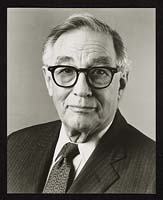
| description | This collection documents the activities of Seth Siegelaub, a gallery owner, independent curator, publisher, art project facilitator, and seminal figure in the Conceptual art movement of the 1960s and 1970s. The records date from 1945 to 2005, with the bulk of the materials dating from 1966 to 1977, and include numerous notes, artist files, correspondence, photographs, ephemera, business papers, and various mock-ups and drafts of publications and art projects. The collection also includes some personal papers of Siegelaub, as well as records detailing his oriental rug collection, the research of Alexander Alberro, and a small amount of documentation involving Siegelaub's efforts to sell his art collection. Despite Siegelaub's relatively brief formal tenure in the art world of the late 1960s and early 1970s, his extensive note-taking and deliberate documentation of his involvement in various projects provide invaluable context for and insight into key thought processes of the conceptual art movement. Siegelaub maintained long-standing personal and business relationships with Conceptual artists such as Carl Andre, Robert Barry, Douglas Huebler, Joseph Kosuth, Sol LeWitt, and Lawrence Weiner; as such, researchers may be interested in the records detailing these relationships, which include correspondence, artist files, installation photographs and diagrams, exhibition posters, and notes. Siegelaub's collaboration with lawyer Robert Projansky in drafting and publishing the influential Artist's Reserved Rights Transfer and Sale Agreement also is extensively documented in the collection with numerous notes, drafts, mock-ups, and related correspondence. Also of particular interest are the early mock-ups and assorted drafts of the famous Xerox Book, as well as the records related to the January 5-31, 1969 exhibition (also known as the January Show), which include correspondence, installation photographs, notes, and numerous mock-ups of the exhibition catalogue. Series I: Exhibitions, Catalogues, and Projects is divided into four subseries. Subseries I.A: General comprises the bulk of the series and dates from 1964 to 2001. The records document the various activities Siegelaub was involved in throughout his career. Although Siegelaub formally left the art world in 1972 when he moved to France, he nevertheless remained tangentially involved by giving interviews and frequently corresponding with artists, scholars, galleries, and museums; the later records of this series reveal this involvement through correspondence, notes, research files, and copies and drafts of publications. Subseries I.B: Artist Files contains notes, photographs, exhibition announcements and posters, clippings, and some correspondence detailing general artist information as well as work on specific projects of a select number of artists. Subseries I.C: Financial and Business Papers include a small amount of documentation of Siegelaub's business activities mostly with his art gallery and publishing business, International General Editions, Incorporated. Subseries I.D: Correspondence and Notes is a small subseries containing some notes and various letters between Siegelaub and artists, art collectors, museums, and others, mostly regarding exhibition planning in the late 1960s. Series II: Personal, is a small series dating from 1945 to 2003. The series is arranged chronologically and contains correspondence, notes, photographs, and ephemera detailing some of Siegelaub's early education and childhood, his relationships with his family and his artist friends (including Carl Andre, Lawrence Weiner, and Douglas Huebler), and some personal writing and poetry. Researchers should note that much of the personal correspondence found in this series may relate to the artist files, correspondence, and business papers found in Series I. Series III: Other Related Materials is a small series divided into three subseries. Subseries III.A: Oriental Rug Business includes receipts, notes, ephemera, and correspondence documenting Siegelaub's involvement in the purchase and sale of oriental rugs while he owned his art gallery. The records date from 1964 to 1972 and are arranged in chronological order. Subseries III.B: Alexander Alberro Papers contains research files, correspondence, and drafts relating to Alexander Alberro's research and publication of dissertation on Siegelaub and Conceptual art. The records date from 1991 to 2000 and are arranged chronologically. Subseries III.C: Art Collection is a small series documenting Siegelaub's efforts to evaluate and research the sale of his art collection and archives. The materials date from 1980s to 2011. Researchers should note that this subseries is restricted until 2030. Biographical Note: Seth Siegelaub was born in the Bronx, New York in 1941 and grew up in New York City. He opened and operated his own gallery, Seth Siegelaub Contemporary Art, from 1964 to 1966. His close working relationships with several artists lead to his evolving roles as a private art dealer and, eventually, an independent curator, art project facilitator, publisher, researcher, and writer. As an independent curator, he organized twenty-one art exhibitions, publications, and projects in North America and Europe between February 1968 and July 1971. He consistently worked closely with artists such as Carl Andre, Robert Barry, Douglas Huebler, Joseph Kosuth and Lawrence Weiner in a wide range of innovative formats and platforms, before largely withdrawing from the art world in 1972. His curatorial work took place both in physical spaces and, most significantly, in the form of books, in which he re-defined the exhibition catalogue itself as the exhibition. Siegelaub's approach to this material mirrored the conceptual art movement itself by raising important questions about the making, display, ownership, distribution, and selling of works of art. His work highlighted issues relating to the internationalization of the art world, the participation of the art spectator, and artists' right to control their own work. In conjunction with the mounting politicization of the art world by the late 1960s, Siegelaub also participated in the growing mobilization against the United States' war against Vietnam. His anti-war activities included producing a fundraising collection catalogue for the United States Serviceman Fund (USSF), an organization set up to promote free speech within the United States military, and which was especially engaged in anti-Vietnam War activity through the funding and support of newspapers. This activity led to Siegelaub's increasing involvement in the political aspects of art and, in 1971, he collaborated with lawyer Robert Projansky to produced The Artist's Reserved Rights Transfer and Sale Agreement, also known as "The Artists' Contract," which defined and attempted to protect the rights and interests of artists as their work circulated within the art world system. In 1972, Siegelaub left the art world to pursue other interests in France and Europe. From 1973 to 1974 he edited and published the first issue of the Marxism and Mass Media bibliographic series and began publishing books on communication and culture, including the classic study on cultural imperialism How to Read Donald Duck: Imperialist Ideology in the Disney Comic by Ariel Dorfman and Armand Mattelart. He also founded the International Mass Media Research Center [IMMRC]. From 1979 to 1983, he worked with Armand Mattelart on the Communication and Class Struggle anthology, a wide-ranging compilation of 128 leftist and progressive texts on the history and practice of communication and culture. Since the mid-1980s, he has researched the production of popular culture, especially concerning the social history of handwoven textiles throughout the world. In 1986 Siegelaub founded the Center for Social Research on Old Textiles [CSROT], and in 1997 he edited and published the Bibliographica Textilia Historiae, the first general bibliography on the history of textiles. |
| extent | Approximately 15.5 linear feet |
| formats | Business Papers Correspondence Photographs Ephemera Artist Files |
| access | The records are open for research and contain some restricted materials. In particular, researchers should note that Subseries III.C: Art Collection 1980-2011 is restricted to the public until 2030. The Seth Siegelaub Papers are the physical property of The Museum of Modern Art. Literary rights, including copyright belong to the authors or their legal heirs and assigns. |
| record link | http://www.moma.org/learn/resources/archives/EAD/Siegelaubf |
| record source | https://library.nyarc.org/permalink/01NYA_INST/ai54l4/alma991004234379707141 |
| finding aid | The finding aid is posted on the repository's website. |
| acquisition information | The Seth Siegelaub Papers were a gift to the Museum Archives by Seth Siegelaub and the Stichting Egress Foundation in 2011. |
| updated | 02/14/2025 10:07:50 |
| .................................................................... | |
| title | Artist file: miscellaneous uncataloged material. Siegelaub, Seth, 1941- | repository | The Museum of Modern Art |
| description | The folder may include announcements, clippings, press releases, brochures, reviews, invitations, small exhibition catalogs, and other ephemeral material. |
| extent | 1 folder |
| formats | Ephemera Clippings Announcements |
| access | Contact the Museum of Modern Art for further details. |
| record source | https://library.nyarc.org/permalink/01NYA_INST/ai54l4/alma991010103969707141 |
| updated | 02/14/2025 10:07:50 |
| .................................................................... | |
| title | PAD/D pamphlet file: miscellaneous uncataloged material. Siegelaub, Seth, 1941- | repository | The Museum of Modern Art |
| description | Forms part of: Political Art Documentation & Distribution Archive. The folder may include resumes, announcements, clippings, press releases, brochures, reviews, invitations, artist's statements, slides, photographs, correspondence, portraits, and other ephemeral material. Source of acquisition MoMA: Political Art Documentation & Distribution Archive. |
| extent | 1 folder |
| formats | Ephemera Clippings Correspondence |
| access | Contact the Museum of Modern Art for further details. |
| record source | https://library.nyarc.org/permalink/01NYA_INST/ai54l4/alma991013027859707141 |
| updated | 02/14/2025 10:07:50 |
| .................................................................... | |
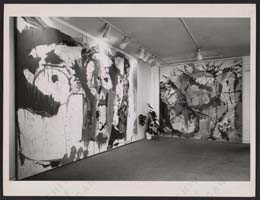
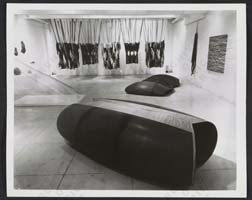
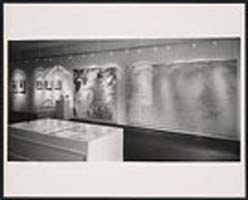
| title | Exhibition records of the Contemporary Wing of the Finch College Museum of Art, 1943-1975 | repository | Archives of American Art |
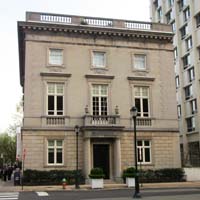
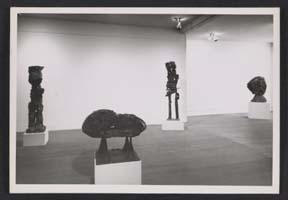
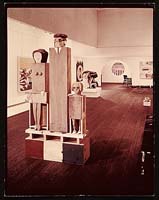
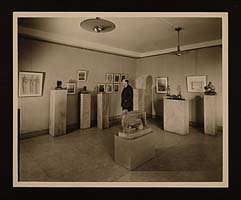
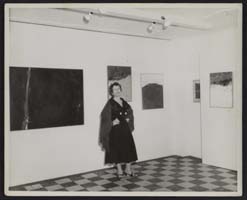
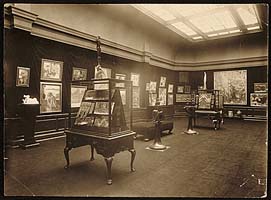
| description | The exhibition records of the Contemporary Study Wing of the Finch College Museum of Art measure 20.4 linear feet and date from 1943 to 1975, with the bulk of records dating from the period its galleries were in operation, from 1964 to 1975. Over two-thirds of the collection consists of exhibition files, which contain a wide range of documentation including artist files, checklists, correspondence, writings, photographs, interviews, numerous films and videos, artist statements, printed materials, and other records. Also found within the collection are administrative records of the museum, artist files, and papers of the Contemporary Wing's director and curator, Elayne Varian, which were produced outside of her work at Finch College. Bio / His Notes: Finch College was founded in 1900 as a private, women's college in New York City. It operated with its affiliated Museum of Art until 1975, when increased costs and a lack of an endowment forced the entire institution to close permanently. Cite as: Exhibition records of the Contemporary Study Wing of the Finch College Museum of Art, 1943-1975. Archives of American Art, Smithsonian Institution. |
| extent | 20.4 linear ft. |
| formats | Exhibition Files Artist Files Correspondence Writings Photographs |
| access | Use of original papers requires an appointment. Use of audiovisual recordings without an access copy requires advance notice. |
| record link | http://siris-archives.si.edu/ipac20/ipac.jsp?&profile=all&source=~!siarchives&uri=full=3100001~!210285~!0#focus |
| record source | http://www.aaa.si.edu/collections/exhibition-records-contemporary-wing-finch-college-museum-art-8114/more |
| acquisition information | The Archives of American Art acquired these records after the Finch College Museum of Art closed permanently in June 1975. |
| updated | 02/14/2025 10:07:50 |
| .................................................................... | |